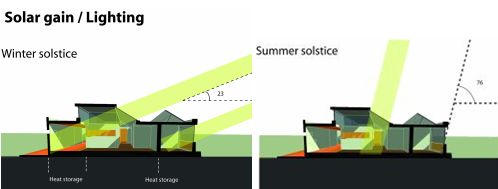
Through the study of the climate data of Badakhshan and the help of psychometric chart, heating strategies were strongly recommended. The new design of bioclimatic health clinic stresses on maximum solar gain for heating and lighting of the spaces. The building is oriented with its longer axis towards the south where the mostly occupied spaces are located. Sky lights are used to light the northern part of the clinic and all the exterior walls are insulated. The building has minimum openings in the northern façade to reduce heat losses. As a whole, the concept followed is visualised as a part of sustainable architecture for Badakhshan because it recommends the use of local materials and workmanship
Taking
into account the unstable delivery and price fluctuations of fossil fuels, as
well as the favourable insolation conditions in
Clean water sources are scarce in this area. Therefore a well should be constructed using a solar water pumping system. This will be connected to a storage tank collecting enough water for cloudy days when there is no enough solar energy to pump.
Solid waste and waste water disposal technologies were suggested to eliminate the risk of spread of diseases and contamination of natural resources like soil, water and air. Incineration was found to be the best method of handling combustible waste while metallic waste like needles is to be encapsulated and buried. A septic tank connected to a soak pit is to be build for treating waste water from the clinic.

|
Design Standards for Bioclimatic Health Centres in Cold Climates in Afghanistan(2).pdf Size : 4.512 Kb Type : pdf |
Click below to access the midterm report, the final report, the poster and the power point presentation of the project...
|
|
mid-term report.pdf Size : 4.105 Kb Type : pdf |

