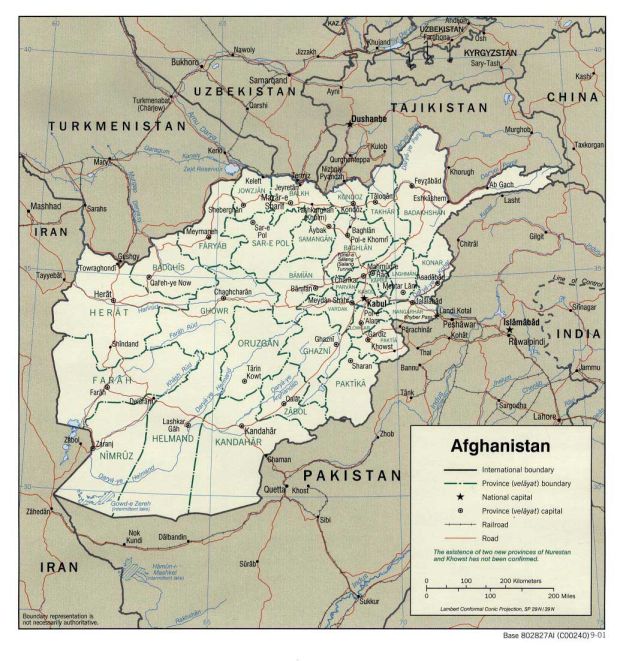
Badakhshan is an Afghan province located in the extreme northeast of the country. In the north, Badakhshan shares international borders with Tajikistan, in the southeast with Pakistan and the far east with China. The province has an area of 47,403 square kilometres,  nearly 90% of the province is mountainous or semi mountainous terrains while the rest of the area is made up of flat or semi-flat land.

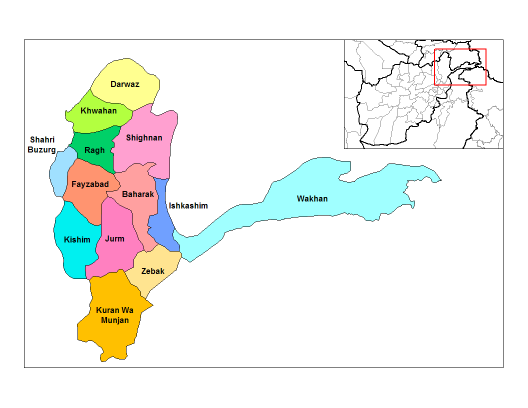
The Amu Darya river forms the north border of Badakhshan with Tajikistan. The Wakhan corridor, a narrow strip about 300 km long land, forms the eastern part of the province.The Hindu Kush Mountains lie in the south of Badakhshan and the Karakoram Mountains in the east.

Badakhshan is divided into 28 districts and ist capital is Faisabad. The province has about 819,396 inhabitants, the majority of them living in Kishm, Argo and Fayzabad district.

Dari is the mostly spoken language and the second most frequent language is Uzbeki. The main religion is Islam. The overall literacy rate in Badakhshan is 31%. However, the percentages differ between men (38%) and women (22%). On average 46% of children between 6 and 13 are enrolled in school.


Infrastructure of the health services

There is a basic infrastructure in the province, in 2005 there were 33 health centres and 2 hospitals with a total of 130 beds, there are also 120 private pharmacies.

The majority of communities do not have a health worker permanently present in their community; out of 1,851 villages, only 56 have a health centre or dispensary within their boundaries.

Access to health care is difficult for many people in the province with one in five people having to travel more than 5 Km to reach their nearest health facility.

More than half the population has to travel over 10 Km to get medical attention.

Economic acticity

The majority of commercial activity is related to trade in agricultural and livestock products. The most important field crops grown include wheat, barley, maize and rice, flax and water melons. In addition the cultivation of poppies for the production of opium is a major source of income.

The province is one of the main mining areas of lapis lazuli. Other minerals found are ruby, emerald, amethyst, gold and sulphur.

There is also a considerable level of production of three main handicrafts—rugs, pottery and jewelry. 


Infrastructure

Badakhshan is one of the poorest provinces of Afghanistan.

The entire infrastructure in the areas of transport, education and medical care is weak.

Only 1% of households in Badakhshan have access to electricity with the majority of these relying on public electricity.

The transport infrastructure in the province is not well developed, with only a quarter of the roads able to take car traffic in all seasons, and 17.8% able to take car traffic in some seasons. In more than half of the province there are no roads at all.


Make a Free Website with Yola.